
Nobody likes surprises when it comes to their vehicle, especially the kind that leave you stranded on the side of the road or staring at a repair bill that makes your stomach drop. That’s where preventive maintenance comes in. At Independent Auto Care in Parker, Colorado, we’ve been helping Honda and Acura owners stay ahead of costly repairs since 2006. Our ASE-certified technicians have over 65 years of combined experience, and we’ve seen firsthand how a little proactive care can save drivers thousands of dollars down the line.
But what exactly does preventive maintenance include? It’s more than just an oil change (though that’s certainly part of it). From fluid checks to brake inspections to battery testing, a comprehensive maintenance appointment covers all the systems that keep your vehicle running safely and efficiently. In this guide, we’ll break down everything that’s included in preventive maintenance so you know exactly what to expect when you bring your car to our shop on South Dransfeldt Road.
Why Preventive Maintenance Matters for Your Vehicle
Here’s the thing about cars: they don’t just break down out of nowhere. Most mechanical failures give warning signs weeks or even months before they become serious problems. The whole point of preventive maintenance is catching those warning signs early, before a small issue turns into an expensive repair.
We see it all the time at our Parker shop. A customer comes in for a routine oil change, and we notice their serpentine belt is starting to fray. Replace it now for a reasonable cost, or wait until it snaps and leaves you stranded with a tow bill and potential engine damage? The choice is pretty clear.
Preventive maintenance also keeps your vehicle performing at its best. Fresh fluids, properly inflated tires, and a healthy battery all contribute to better fuel efficiency, smoother handling, and more responsive braking. And let’s not forget about safety, worn brake pads or aging hoses aren’t just inconvenient, they can be genuinely dangerous.
For those of us living in Colorado, preventive maintenance is especially important. Our fluctuating temperatures put extra stress on rubber components like belts and hoses. The cold winters are tough on batteries. And if you’re driving through Parker’s varying elevations or heading up to the mountains, your vehicle’s systems are working harder than you might realize.
Regular maintenance also protects your investment. A well-maintained Honda or Acura can easily last 200,000 miles or more, but only if you’re taking care of it along the way. Plus, having documented service records can significantly boost your resale value when it’s time to trade up.
Fluid Checks and Replacements
Your vehicle relies on multiple fluids to keep everything running smoothly. Think of them as the lifeblood of your car, they lubricate moving parts, transfer heat, enable braking, and much more. During a preventive maintenance appointment, we check all of them.
Engine Oil and Filter Changes
Engine oil is probably the most well-known maintenance item, and for good reason. It lubricates the countless moving parts inside your engine, reduces friction, and helps carry away heat. Over time, oil breaks down and becomes contaminated with dirt, metal particles, and combustion byproducts. That’s why regular oil changes are non-negotiable.
At Independent Auto Care, we follow factory-scheduled maintenance intervals for your specific Honda or Acura model. Most modern vehicles can go between 5,000 and 7,500 miles between oil changes, though this varies based on your driving habits and the type of oil you use. We always replace the oil filter at the same time, a clogged filter defeats the purpose of fresh oil.
We’ll also check your oil level between changes if you’re experiencing any concerns. Some oil consumption is normal, especially in higher-mileage vehicles, but excessive consumption can indicate underlying issues that need attention.
Transmission and Brake Fluids
Transmission fluid keeps your gearbox shifting smoothly, whether you’re driving an automatic or manual. It lubricates gears, cools the transmission, and helps transfer power from the engine to the wheels. Neglected transmission fluid can lead to rough shifting, slipping gears, and eventually, you guessed it, expensive transmission repairs.
Brake fluid is equally critical. It’s a hydraulic fluid that transfers the pressure from your foot on the brake pedal to the brake calipers at each wheel. Brake fluid is hygroscopic, meaning it absorbs moisture from the air over time. This moisture lowers the fluid’s boiling point and can cause brake fade during heavy braking. We check brake fluid condition and level during every preventive maintenance visit.
We also inspect your coolant (antifreeze), power steering fluid, and windshield washer fluid. Each plays an important role, and keeping them at proper levels with clean fluid prevents premature wear on related components.
Brake System Inspection
Your brakes are arguably the most important safety system on your vehicle. We take brake inspection seriously, it’s not something we rush through or treat as an afterthought.
During a preventive maintenance visit, we inspect your entire braking system. This includes measuring brake pad thickness to see how much life they have left. Most brake pads start around 10-12mm thick and should be replaced when they wear down to about 3mm. We’ll give you an honest assessment of where yours stand and whether you can wait until your next service or should address them now.
We also inspect the brake rotors for wear, warping, and damage. Rotors can develop grooves, hot spots, or uneven wear patterns that affect braking performance. Sometimes they can be resurfaced: other times replacement is the better option. We’ll explain your choices and help you make the right call.
The brake calipers and hardware get attention too. Calipers can stick, causing uneven pad wear and reduced braking efficiency. Slides and pins need proper lubrication to function correctly. And we check the brake lines and hoses for any signs of leaking, cracking, or corrosion.
For vehicles equipped with ABS (anti-lock braking systems), we can diagnose any warning lights or unusual behavior during braking. Our technicians are experienced with Honda and Acura ABS systems and can identify issues before they compromise your safety.
Tire Maintenance and Rotation
Tires are your vehicle’s only contact with the road, so their condition directly impacts handling, braking, and safety. Tire maintenance is a key component of any preventive care program.
Tire rotation is one of the most overlooked services, but it’s genuinely important. Your front and rear tires wear differently depending on whether your vehicle is front-wheel drive, rear-wheel drive, or all-wheel drive. The front tires on a front-wheel-drive Honda Civic, for example, handle both steering and power delivery, so they wear faster than the rears. Regular rotation, typically every 5,000 to 7,500 miles, evens out this wear and extends the life of your tires.
We also check tire pressure during every visit. Under-inflated tires wear faster, reduce fuel economy, and can affect handling. Over-inflated tires wear unevenly in the center and provide less grip. We set your tires to the manufacturer’s recommended pressure, which you can find on the driver’s door jamb.
Tread depth inspection tells us whether your tires are safe for continued use. The legal minimum in Colorado is 2/32 of an inch, but we typically recommend replacement at 4/32 for better wet-weather traction. We check for uneven wear patterns too, which can indicate alignment issues, suspension problems, or improper inflation.
If we notice your vehicle pulling to one side or your tires showing signs of misalignment, we can perform a wheel alignment at our Parker shop. Proper alignment not only extends tire life but also improves fuel efficiency and driving comfort.
Battery and Electrical System Testing
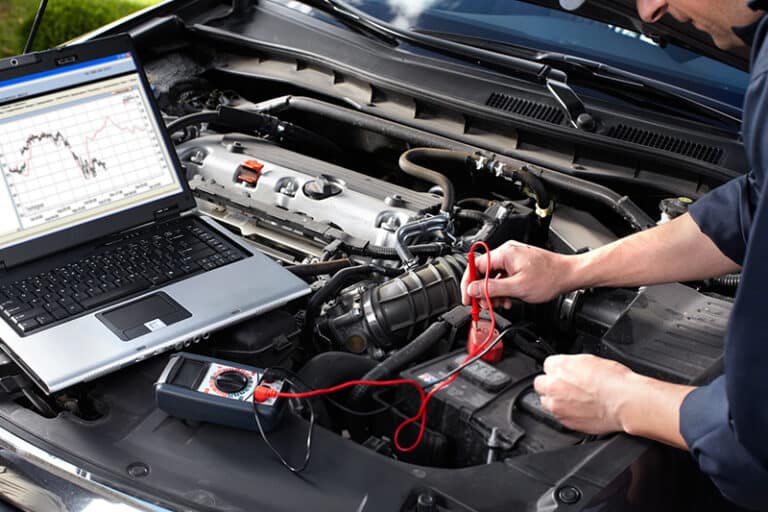
Car electrical repair and maintenance goes far beyond just replacing the battery, though that’s certainly part of what we do at Independent Auto Care. Your vehicle’s electrical system powers everything from the starter to the headlights to the infotainment system, and modern vehicles are more electrically dependent than ever.
We start with a comprehensive battery test. This tells us the battery’s current condition, cold cranking amps, and overall health. A battery might start your car fine in the summer but fail the first cold morning in November. Colorado winters are brutal on batteries, and if yours is more than five years old, we’ll let you know it’s time to start thinking about a replacement.
Beyond the battery itself, we test the charging system. Your alternator keeps the battery charged while driving, if it’s failing, you’ll eventually end up stranded even with a brand-new battery. We check alternator output and look for any signs of impending failure.
The starter gets attention too. It takes electricity from your battery and uses it to crank the engine. A failing starter often gives warning signs: slow cranking, clicking sounds, or intermittent no-starts. We can diagnose starter issues before they leave you stuck in a parking lot.
We also inspect wiring, connections, and grounds. Corroded battery terminals are a common culprit for electrical problems, a quick cleaning can restore proper connections. With car electrical repair from our experts, you can turn your key or press that ignition button without having to hold your breath.
Belt and Hose Inspection
In your Honda or Acura vehicle, belts keep important parts moving while hoses keep fluids flowing to all the right places. But, because we live in Colorado, fluctuating temperatures can cause premature wear and tear on these rubber components. That’s why belt and hose inspection is a critical part of preventive maintenance.
The serpentine belt is the most important belt in modern vehicles. This single belt drives your alternator, power steering pump, air conditioning compressor, and water pump. If it fails, you lose all of these systems simultaneously, and in the case of the water pump, your engine can overheat within minutes.
We inspect your serpentine belt for wear and tear such as fraying and cracks, as well as signs of impending failure from splits. We look for heat damage called glazing, which can cause belt hardening and a shiny surface. We also check the underside of the belt to see if the “teeth” are cracked, missing, or beginning to separate from the main belt body.
For applicable Honda and Acura models, we also monitor timing belt condition and replacement intervals. The timing belt is internal to the engine and critical for proper valve operation. When these fail, and they do fail eventually, the results can be catastrophic for your engine.
Hose inspection covers the radiator hoses, heater hoses, and other coolant lines. We physically check hoses for bulging, swelling, cracking, and collapsed areas, as well as a glassy or hardened surface which could indicate heat damage. We inspect all seals and connections for signs of leaking coolant or other vital engine fluids.
With belts and hoses servicing from our experts, you can rest assured that issues will be fixed before leaving you stranded on the side of the road.
How Often to Schedule Preventive Maintenance
So how often should you actually bring your vehicle in for preventive maintenance? The honest answer is: it depends on your vehicle, your driving habits, and your manufacturer’s recommendations.
Most Honda and Acura vehicles have a maintenance minder system that tracks your driving conditions and alerts you when service is due. This is a good starting point, but it’s not the whole picture. The system primarily tracks oil change intervals, it doesn’t necessarily account for all the other components we’ve discussed.
As a general guideline, we recommend a comprehensive preventive maintenance inspection every 5,000 to 7,500 miles or every six months, whichever comes first. This aligns with typical oil change intervals and gives us regular opportunities to catch developing issues.
Certain services have their own intervals:
- Oil changes: Every 5,000 to 7,500 miles (varies by vehicle and oil type)
- Tire rotation: Every 5,000 to 7,500 miles
- Brake inspection: Every 12,000 to 15,000 miles or annually
- Transmission fluid: Varies widely, some vehicles go 60,000+ miles, others need it sooner
- Coolant flush: Typically every 30,000 to 50,000 miles
- Timing belt: Usually 60,000 to 100,000 miles depending on the engine
Your driving conditions matter too. Lots of short trips, frequent stop-and-go traffic, extreme temperatures, and towing or hauling all qualify as “severe” driving conditions that may require more frequent maintenance.
We’re happy to create a customized maintenance schedule based on your specific vehicle and driving patterns. Just ask during your next visit to our Parker shop.
Conclusion
Preventive maintenance isn’t glamorous, and it doesn’t give you that new-car thrill. But it’s one of the smartest investments you can make in your vehicle. Regular fluid changes, brake inspections, tire rotations, battery testing, and belt and hose checks all work together to keep your Honda or Acura running reliably for years to come.
At Independent Auto Care in Parker, we’ve built our reputation on honest, thorough service. We’re not going to sell you something you don’t need, but we will tell you what your vehicle actually needs to stay safe and dependable. Our ASE-certified technicians know Honda and Acura vehicles inside and out, we’ve specialized in them since 2006 because we genuinely love working on these cars.
Whether you’re due for an oil change or haven’t had a full inspection in a while, we’d love to see you at our shop on South Dransfeldt Road. Give us a call or stop by to schedule your preventive maintenance appointment. Your future self, and your wallet, will thank you.